


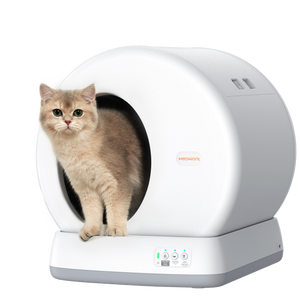
An automatic litter box is designed for the average healthy adult cat, and most of them are. But households rarely consist of averages. There is the fourteen-year-old with stiff hips who takes a long time to climb in, the eight-week-old kitten who treats the drum as a jungle gym, and the shy rescue that flinches at any sound louder than a refrigerator hum. For those cats, the safety margin of an automated box is narrower, and the decisions that protect them are slightly different.
This guide looks at the safe self cleaning litter box question through the lens of vulnerability rather than convenience. If your household includes a senior, a kitten, a cat with limited mobility, or a nervous newcomer, the following considerations should shape both the model you choose and the way you introduce it.
Why Fragile Cats Need a Different Calculation
A healthy adult cat can leap out of a moving drum in a fraction of a second. A senior cat with arthritis cannot. A kitten may not recognize the sound of a motor as a warning at all. The same sensor delay that feels generous for a nimble cat can be too short for an animal that needs ten seconds to back out of an entrance tunnel. Safety, for these cats, is measured in seconds and in the height of a step.
The good news is that the right design closes most of that gap. Low entrance lips, wide interior space, and a cycle that waits patiently after the last detected movement all reduce the physical demand on the animal. The wrong design, no matter how many features it advertises, asks a fragile cat to move faster than its body allows.
Choosing a Box With a Senior Cat in Mind
Start with the entrance. A high threshold that a young cat clears without thinking becomes a daily obstacle for an older animal, and repeated struggling can lead a cat to avoid the box entirely. Look for a low step, a gentle ramp, or a model whose opening sits close to the floor. If the unit you like has a higher lip, a small ramp placed in front can make the difference between use and avoidance.
Interior room matters for the same reason. A cat that cannot turn around comfortably will often urinate near the entrance and leave, which defeats the purpose of an automated box. Check the usable floor space inside the drum rather than the exterior footprint, and compare it against your cat’s length from nose to tail base.
Then examine how the machine handles a slow exit. The ideal behavior is a long hold after the last motion is detected, followed by a gradual start. Brands that publish their delay settings, as Meowant does in its setup documentation, make it easy to confirm that the timing suits an animal that moves deliberately.

Kittens: Curiosity Meets Moving Parts
Kittens are the opposite problem. They are fast, fearless, and fascinated by anything that moves. Once a young cat discovers that the drum rotates, it may treat the box as a ride rather than a bathroom, and a kitten that rides the rake is exactly the scenario sensors are meant to prevent.
The safest approach for a young cat is to keep the automatic cycle switched off until the kitten is large enough to trigger the weight sensor reliably. Use the box in manual mode, scooping by hand, and let the kitten grow into the machine. A common rule of thumb is to wait until the cat weighs enough that its presence is unmistakable to the load cell, but the specific threshold depends on the model, so check the manufacturer’s guidance.
Supervise early cycles closely. If your kitten chases the rake or tries to climb in mid-cycle, pause automation and try again in a few weeks. Curiosity fades with familiarity, but only if the first experiences are calm.
Nervous Cats and the Sound Problem
Noise is the most underrated safety factor. A motor that whines, a rake that clicks, or a drum that thumps can send a timid cat sprinting from the room. That flight response is not just stress; it can result in a cat avoiding the box and eliminating behind the sofa. Before you commit to a model, read owner reports about noise and, if possible, listen to the unit in person.
Placement helps as well. A box tucked into a quiet corner away from the washer, the front door, and the food bowl gives a nervous cat a retreat. Running the first cycles while the cat is elsewhere in the home, rather than watching from a meter away, lets it acclimate at its own pace.
Signs of Stress You Should Not Ignore
A nervous cat will tell you it is uncomfortable long before it stops using the box. Watch for a tail that tucks low while approaching, ears that flatten at the sound of the motor, or a cat that circles the unit several times without entering. Some cats eliminate just outside the opening, which is often a signal that the interior feels unsafe rather than a house-training lapse.
Vocalizing near the box is another clue, especially in cats that are normally quiet. A low growl or a short yowl at the moment the drum turns usually means the machine startled the animal at some point. Respond by pausing automation for several days and running cycles only when the cat is out of the room. If the behavior persists after a calm reintroduction, a manual box may be the better long-term answer for that particular animal.
A Gradual Introduction That Respects the Cat
The introduction sequence for a vulnerable cat should be slower than the manual suggests. Leave the unit unplugged for two or three days so the cat can investigate a completely still object. Add a small amount of used litter from the old box so the scent is familiar. Then run a single manual cycle while the cat is in another room, and repeat once a day until the sound no longer causes a startle response.
Only after that should the box run automatically, and even then, keep the cat’s old box available for a transition period. Two boxes side by side let the cat choose, and choice reduces stress. Remove the old box only when the cat has used the new one consistently for a week or more.

Daily Habits That Keep Vulnerable Cats Out of Trouble
Once the box is in service, a few habits protect the cats that need it most. Check the drum before bed each night to confirm it is empty and the rake is parked in its resting position. Watch for changes in how your senior cat approaches the entrance, since a new hesitation often signals pain rather than stubbornness. And keep a manual scoop nearby so that a machine failure never leaves a fragile cat without a usable box.
Monitor weight and hydration as well. An older cat that suddenly uses the box more often, or strains without producing anything, needs a veterinarian rather than a settings adjustment. Automation makes it easy to stop paying attention to litter habits, and those habits are often the first sign of illness.
Finally, revisit the setup as your cat ages. A box that worked well at eight may need a ramp at twelve and a lower entry at fifteen. The safe self cleaning litter box for a senior is not a fixed product; it is a configuration you adjust as the animal changes.
When to Keep the Automatic Cycle Switched Off
Some situations call for turning automation off entirely, at least temporarily. After surgery, a cat may be groggy and slow, and a cycle that would normally be safe can catch a sedated animal mid-exit. During a household move, the combination of unfamiliar surroundings and a mechanical box is more stress than most cats handle well. And at the very end of a cat’s life, when mobility is limited and comfort is the priority, a simple low-sided box is often kinder than a machine that insists on a schedule.
Judging when to step back is not failure. The best outcome for a vulnerable cat is a box it uses without fear, and sometimes that means a manual box in a quiet room while the automated unit waits for a healthier chapter. Automation should serve the animal; the moment it stops doing that, the machine should step aside.
Design for the Cat You Have, Not the Average Cat
Automatic litter boxes work well for most cats, but vulnerable animals expose the limits of any design faster than healthy adults do. Low entrances, generous interior space, patient cycle timing, and quiet motors are not luxuries for these cats; they are the difference between a machine that helps and one that frightens. The introduction period deserves extra time, and the old box should stay in place until the new one has clearly been accepted.
If you share your home with a senior, a kitten, or a nervous rescue, judge every model by how it behaves for the slowest and smallest cat in the house. Convenience is worth having, but it should never come at the expense of the animal that needs the most patience.


